PCR & qPCR
Reagents for your Quantitative Reverse Transcription PCR
Get access to high sensitivity and accurate results.
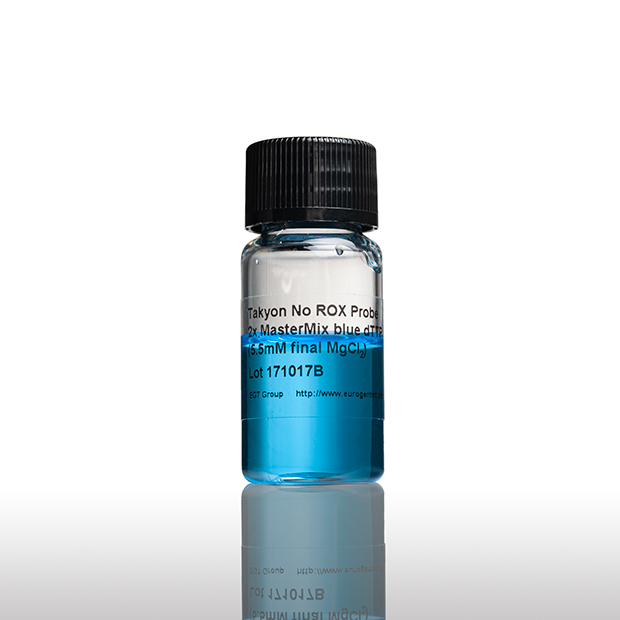
Innovative RT-qPCR reagents
Takyon®, inspired by particles moving faster than light (Tachyons), is the reference product line
for real-time PCR at Eurogentec. Its advanced formulations gather all the advantages of an optimized
reaction buffer combined to combined to a proprietary fusion Taq polymerase increasing
robustness and efficiency.
Get access to performant solution for your RT-qPCR applications.
One-step approach
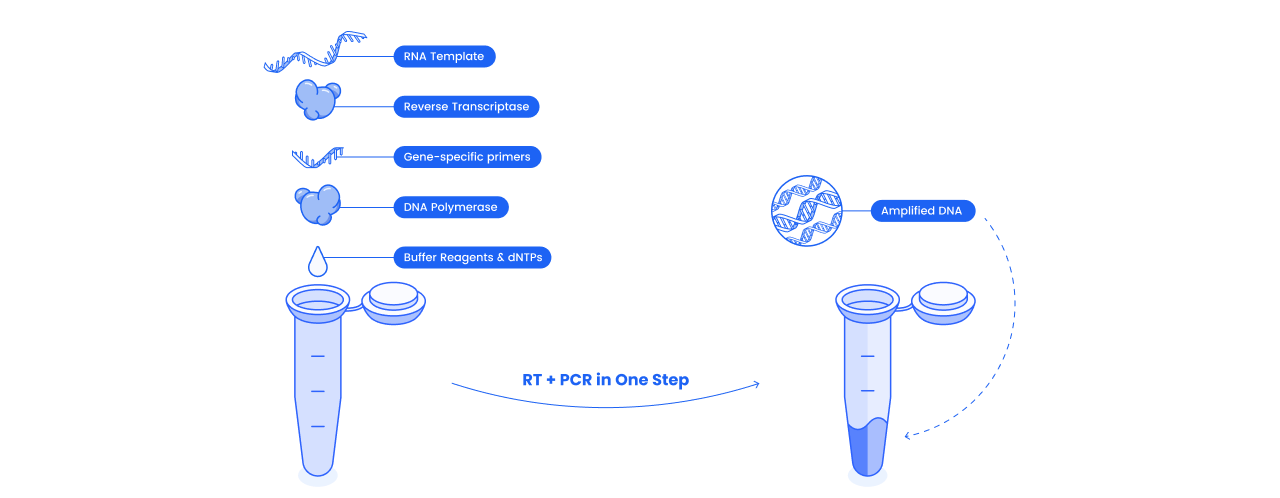
One-Step approaches allow consecutive RT and qPCR reactions in a single tube, enabling
real-time PCR results directly from RNA-containing samples.

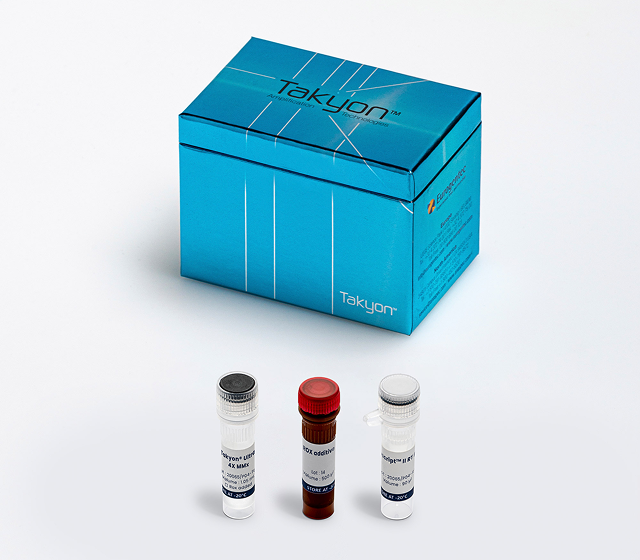
Takyon® Ultra, our all-in-one advanced solution
The optimized formulation of the One-Step RT-qPCR Takyon® Ultra is based on the reliability of the Takyon® range. It delivers high sensitivity, reproducibility, and inhibitor tolerance. It is fully compatible with multiplexing, making it our recommended choice for RNA quantification.
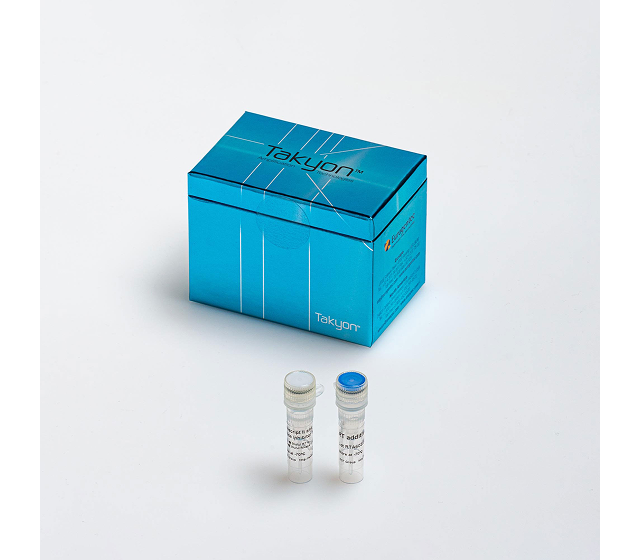
One-Step kit Converter
Convert any Takyon® dTTP Master Mix for qPCR assays into a One-step RT-qPCR kit. This converter kit contains the Euroscript II RT which delivers highly robust performance on classical mRNAs, small RNAs and viral RNAs.
Two-step RT-qPCR
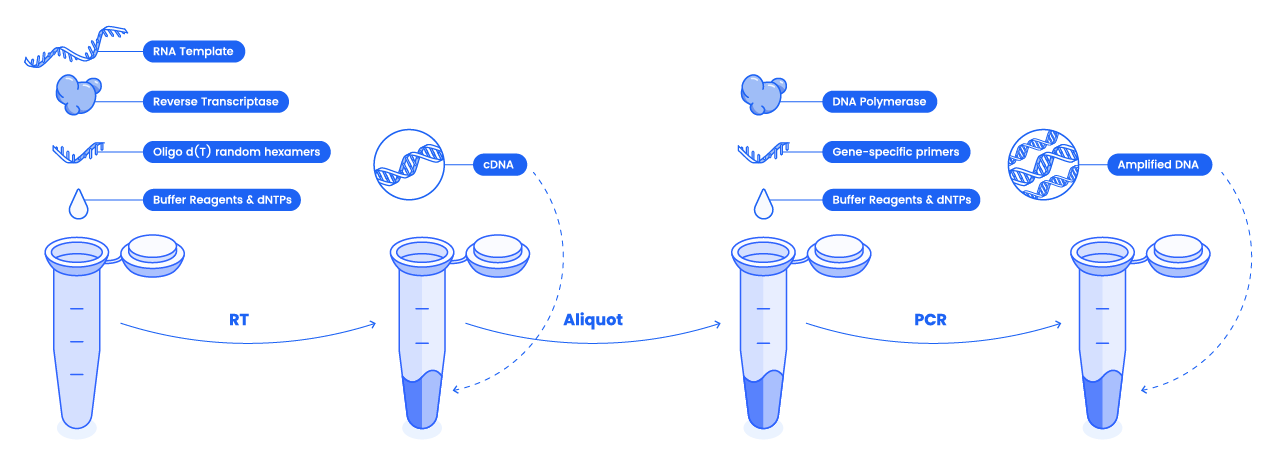
A Two-Step reaction consists in distinct and stepwise RT and qPCR reactions
(using Master Mix or Core Kit).

Two-step kits
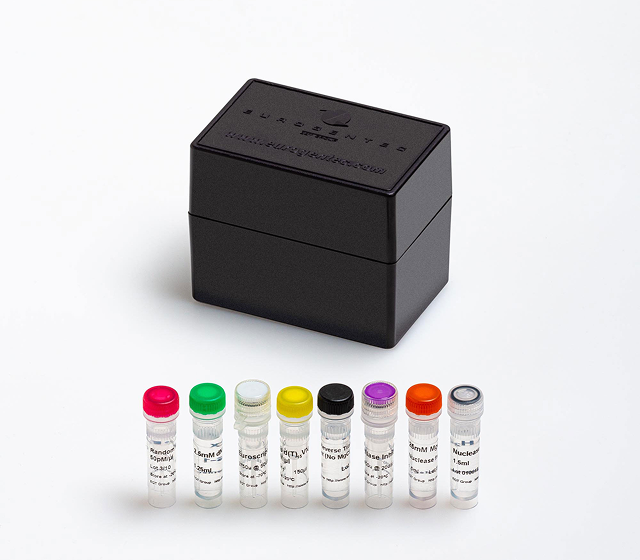
Combine any qPCR kit with the First strand cDNA synthesis Core kit to generate your pool of cDNA and then run your dedicated qPCR experiment.
FAQs
Yes. Some kits, such as Takyon® dTTP master mixes containing dTTPs the four classical dNTPs, can be converted into one-step RT-qPCR reagents using a converter kit. This approach enables reverse transcription and quantitative PCR to be performed during the same run.
- One-step RT-qPCR combines reverse transcription and quantitative PCR in a single reaction tube, reducing sample handling and the risk of contamination.
- Two-step RT-qPCR performs reverse transcription and PCR in separate reactions, providing greater experimental flexibility and allowing cDNA to be reused for multiple targets.
Challenges like primer-dimer formation, low RNA quality, or variable efficiency can affect results. Using high-quality reagents, optimized primer/probe design, and proper controls enhances reliability. Refer to MIQE guidelines for robust experimental design and proper reporting of the results.
Recommended controls include no-template controls (NTC), no-reverse-transcription controls (No-RT), and positive controls. These controls help identify contamination, genomic DNA amplification, and assay performance issues.